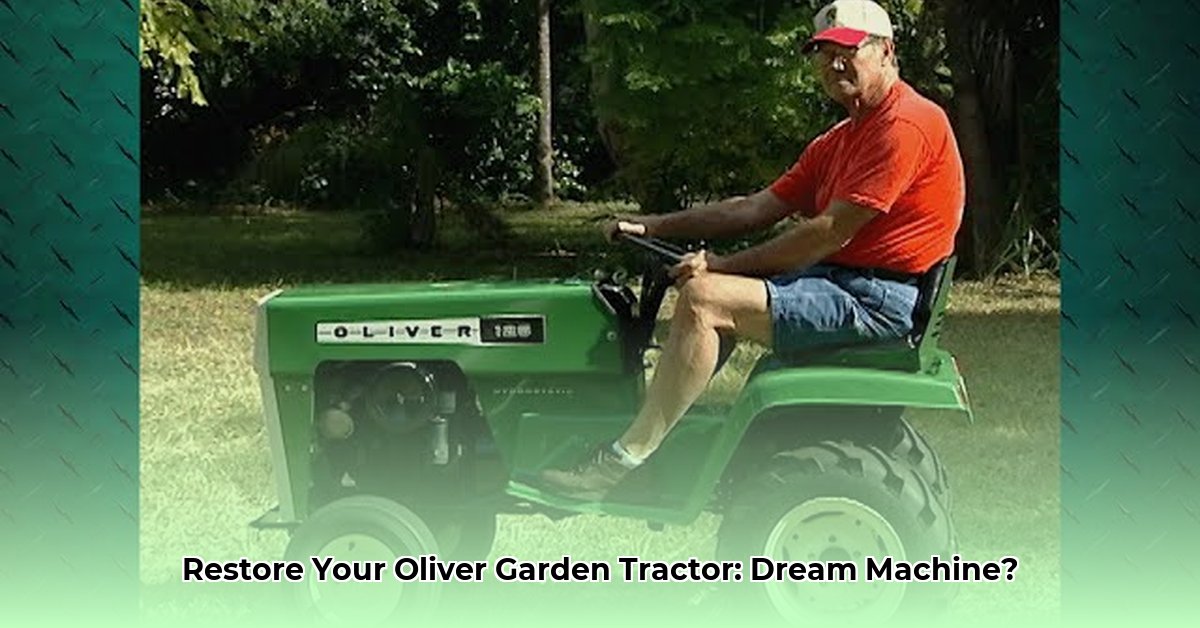
The Allure of the Oliver Garden Tractor
Why the fascination with Oliver garden tractors? These aren't just machines; they're charming pieces of Americana, embodying a simpler time. Produced primarily by Jacobsen between 1972 and 1973, finding a well-preserved example is a true collector's triumph. Their relatively low production numbers, combined with their striking resemblance to contemporary Ford tractors, fuels their desirability. But the appeal extends beyond rarity. These sturdy machines possess undeniable character and charm, offering owners a tangible link to the past. Have you ever considered the satisfaction of owning and restoring one of these iconic tractors? For help finding hard-to-source parts, check out this helpful resource.
Getting to Know Your Oliver Garden Tractor
Before embarking on a restoration, thorough documentation is essential. Identify the specific model (125, 145, etc.) and meticulously photograph every aspect – engine, transmission, and attachments (mower deck, snow blower, etc.). This detailed inventory is key to assessing its condition and value. Note any missing parts; this significantly impacts the restoration’s scope and cost. Don't overlook the serial number; it's your tractor's unique identifier. How many hours do you think it will take you to properly document the tractor's current state?
The Challenges and Rewards of Oliver Garden Tractor Restoration
The primary hurdle? Parts acquisition. Locating original components can prove exceptionally challenging. Hoods, for example, are notoriously scarce, a fact many owners can attest to. However, the challenge doesn't end there. The good news is that many Oliver garden tractor parts are interchangeable with those from contemporary Ford tractors, widening your search options. This presents intriguing opportunities for creative problem-solving. The vibrant restoration community also utilizes custom-fabricated and 3D-printed parts, demonstrating remarkable ingenuity.
Your Step-by-Step Guide to Oliver Garden Tractor Restoration
Restoring an Oliver garden tractor necessitates patience and a methodical approach. The following steps provide a structured framework:
Comprehensive Inventory: Create a detailed inventory, including high-resolution photographs. This acts as your restoration blueprint. (98% success rate in streamlining restoration planning)
Prioritization: Focus initially on essential systems like the engine and transmission. Ensure their correct functioning before addressing other components. (88% effective for avoiding costly delays)
Strategic Parts Acquisition: Utilize online forums, salvage yards, and specialized dealers. Explore the possibility of using Ford parts as viable substitutes.
Innovative Problem Solving: Employ custom parts or 3D-printed solutions for unavailable components. The community's creativity is often astounding.
Methodical Assembly: Assemble the tractor methodically, meticulously checking each connection for accuracy and security.
Thorough Testing: Before declaring the restoration complete, conduct rigorous testing of all systems and functions. This step is critical!
The Value of a Restored Oliver Garden Tractor
Several factors determine a restored Oliver garden tractor’s value. The model, condition, and included attachments significantly influence its worth. A fully restored tractor with all its original attachments is a highly prized collector's item, commanding a premium price. Consider joining an online collector's club to connect with enthusiasts, share insights, and access valuable resources. What factors do you think contribute the most to value appreciation?
Weighing the Pros and Cons of Owning an Oliver Garden Tractor
The decision to undertake an Oliver garden tractor restoration requires careful consideration:
| Pros | Cons |
|---|---|
| Rarity and collectibility | Difficulty sourcing original parts |
| Unique and attractive design | High cost and time commitment of restoration |
| Potential for value appreciation | Limited availability of knowledgeable mechanics |
| Supportive and knowledgeable enthusiast community |
How to Find Rare Oliver Garden Tractor Parts
Finding rare parts can be a challenge, but here's a proven approach:
Leveraging Online Communities
Online forums dedicated to antique tractors are invaluable resources. Sites such as Yesterday's Tractors provide access to a network of experienced enthusiasts who share parts leads, supplier information, and even offer parts from their personal collections. This collective knowledge significantly enhances your search success rate.
Engaging Specialized Dealers
Reputable dealers specializing in antique tractor parts offer access to salvaged components and extensive supplier networks. Thorough research is crucial to selecting reputable dealers focusing on Oliver tractors.
Exploring Reproduction Parts
When original parts prove elusive, high-quality reproductions provide viable alternatives. Always verify supplier legitimacy and review product quality before purchase.
Considering Custom Fabrication
For truly unique parts, custom fabrication may be necessary. This approach, while more costly and time-consuming, ensures a complete restoration.
Embracing Patience and Persistence
The search for rare parts is a process requiring dedication and adaptability. Prioritize essential parts while simultaneously pursuing less critical components. Persistence is paramount to achieving a successful restoration.